

Introduction to Linoleum Flooring
Let’s be honest—linoleum flooring doesn’t always get the respect it deserves. For years, it was unfairly lumped together with outdated designs and mistaken for vinyl. But here’s the truth: linoleum is quietly making a powerful comeback. Why? Because people are craving natural materials, durability, and eco-friendly choices that don’t scream for attention but still perform like a champ.
If flooring were a personality, linoleum would be that reliable friend who never lets you down—low drama, long-lasting, and always there when you need it.
What Is Linoleum Flooring?
Linoleum flooring is a natural floor covering made from renewable materials like linseed oil, cork dust, wood flour, tree resins, and limestone, all backed by jute. Unlike synthetic alternatives, linoleum is biodegradable, sustainable, and built to last.
Why Linoleum Is Making a Comeback
In a world obsessed with sustainability and indoor air quality, linoleum checks all the right boxes. It’s durable, stylish, and environmentally responsible—three things modern homeowners and designers care deeply about.
The History of Linoleum Flooring
Origins and Early Use
Linoleum was invented in the mid-1800s and quickly became a flooring favorite in homes, ships, and public buildings. Its durability and ease of cleaning made it a practical choice long before “eco-friendly” became a buzzword.
Linoleum vs Vinyl – Clearing the Confusion
Here’s the big misunderstanding: linoleum and vinyl are not the same. Vinyl is synthetic and petroleum-based. Linoleum is natural. Calling linoleum “vinyl” is like calling olive oil “motor oil”—they’re just not in the same family.
What Linoleum Flooring Is Made Of
Natural Raw Materials Explained
Linoleum’s magic lies in its ingredients:
- Linseed oil (from flax seeds)
- Cork and wood flour
- Pine resin
- Limestone
- Jute backing
These materials are pressed together to form a tough yet flexible surface.
Why These Materials Matter
Because linoleum is made from natural components, it ages gracefully. Instead of peeling or cracking, it develops a subtle patina—kind of like leather that gets better with time.
Types of Linoleum Flooring
Linoleum Sheet Flooring
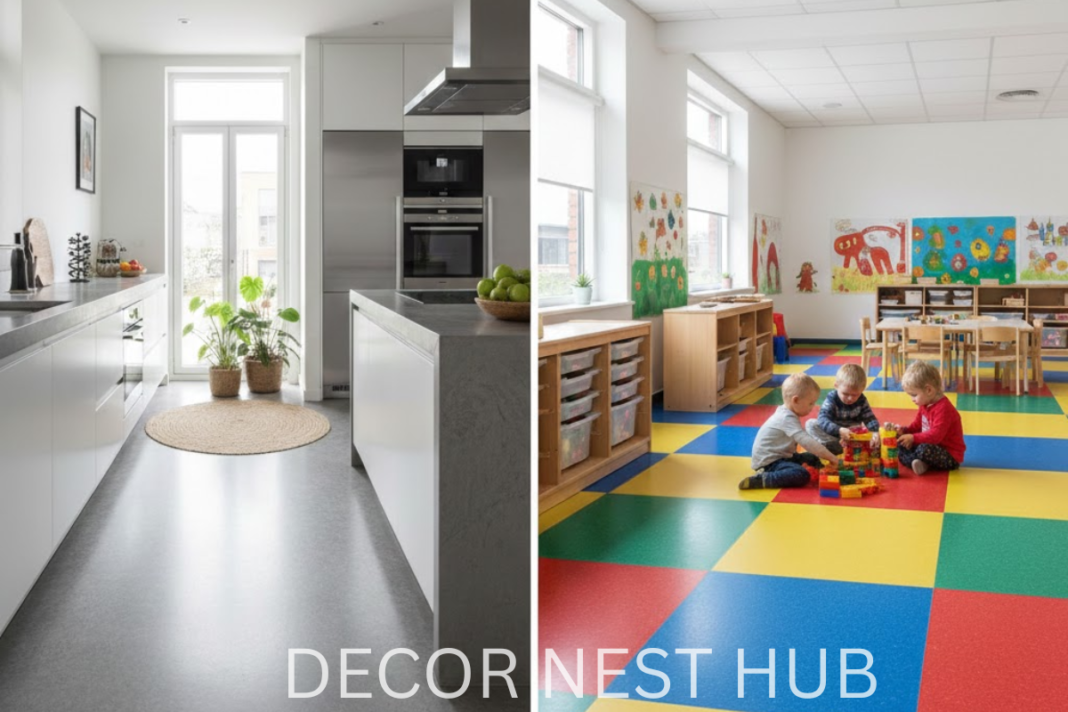
Sheet linoleum comes in large rolls, offering a seamless look that’s ideal for kitchens and commercial spaces.
Linoleum Tiles
Tiles provide design flexibility and easier replacement if damage occurs.
Click-Lock Linoleum Flooring
A newer innovation, click-lock linoleum makes installation faster and more DIY-friendly without sacrificing performance.
Key Features of Linoleum Flooring
Durability and Longevity
With proper care, linoleum flooring can last 30 to 40 years. That’s not marketing hype—that’s proven performance.
Comfort Underfoot
Linoleum has a natural resilience that feels warmer and softer than tile or stone.
Color That Lasts
Because the color runs through the material, scratches are far less noticeable than on surface-printed floors.
Benefits of Linoleum Flooring
Eco-Friendly and Sustainable
Linoleum is biodegradable, low in VOCs, and made from renewable resources. It’s flooring you can feel good about—literally and ethically.
Low Maintenance
Regular sweeping and occasional damp mopping are usually enough.
Naturally Antibacterial
Thanks to linseed oil, linoleum has natural antibacterial properties, making it ideal for homes with kids or pets.
Drawbacks of Linoleum Flooring
Moisture Sensitivity
Linoleum doesn’t love standing water. Excess moisture can cause damage if not addressed promptly.
Installation Challenges
Proper installation requires skill. A poorly installed linoleum floor can curl or separate.
Initial Cost Considerations
Linoleum can cost more upfront than vinyl, but it often pays for itself over time.
Linoleum Flooring for Residential Spaces
Kitchens and Dining Areas
Durable, hygienic, and easy to clean—linoleum thrives where spills happen.
Living Rooms and Bedrooms
With modern colors and textures, linoleum feels cozy and contemporary.
Hallways and Entryways
High foot traffic? No problem. Linoleum handles wear like a pro.
Linoleum Flooring for Commercial Spaces
Schools and Educational Buildings
Linoleum’s durability and low maintenance make it a favorite in schools.
Healthcare Facilities
Its antibacterial nature and seamless installation support hygiene standards.
Offices and Retail Spaces
Quiet underfoot and visually versatile, linoleum works beautifully in professional environments.
Design Options and Style Ideas
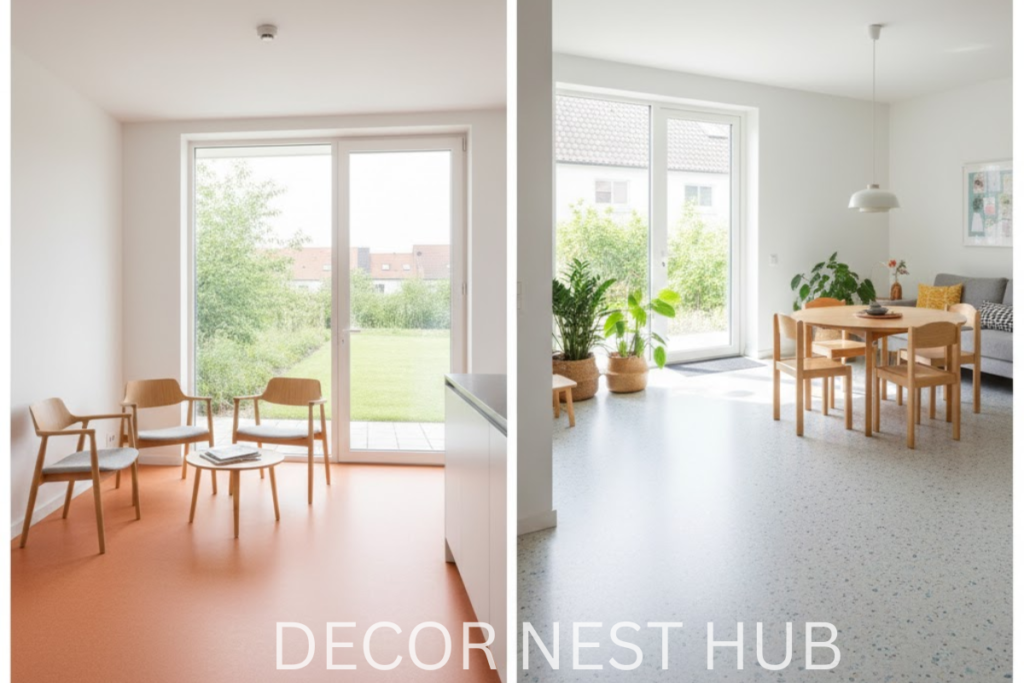
Colors, Patterns, and Finishes
From earthy neutrals to bold modern hues, linoleum has stepped far beyond its retro roots.
Modern vs Retro Looks
Want a mid-century vibe or a sleek minimalist aesthetic? Linoleum can do both.
Installation Process of Linoleum Flooring
Subfloor Preparation
A smooth, dry subfloor is essential. Think of it as laying a perfect foundation for a house.
Professional vs DIY Installation
While click-lock options suit DIYers, traditional linoleum is best left to professionals.
Maintenance and Care Tips
Daily Cleaning Routine
Dust, sweep, and mop with mild cleaners—nothing fancy required.
Long-Term Care and Protection
Periodic sealing helps protect the surface and extend its lifespan.
Linoleum Flooring vs Other Flooring Types
Linoleum vs Vinyl Flooring
Linoleum is natural and biodegradable; vinyl is synthetic. Linoleum wins on sustainability.
Linoleum vs Laminate and Hardwood
Unlike hardwood, linoleum resists dents and stains. Unlike laminate, it’s repairable and quieter.
Cost and Value of Linoleum Flooring
Price Range Breakdown
Expect mid-range pricing that reflects its quality and lifespan.
Long-Term Value and ROI
Fewer replacements, lower maintenance, and longer life equal excellent value.
How to Choose the Right Linoleum Flooring
Matching Linoleum to Your Lifestyle
Busy home? Kids? Pets? Linoleum handles chaos gracefully.
Choosing the Right Thickness and Finish
Thicker options last longer, while matte finishes hide wear better.
Conclusion
Linoleum flooring proves that sometimes the old ways are still the best. Natural, durable, stylish, and sustainable, it offers a refreshing alternative in a market flooded with synthetic options. If you want flooring that works hard, ages beautifully, and respects the planet, linoleum isn’t just a smart choice—it’s a timeless one.
Frequently Asked Questions (FAQs)
1. Is linoleum flooring waterproof?
Linoleum is water-resistant but not fully waterproof. Prompt cleanup is essential.
2. How long does linoleum flooring last?
With proper care, 30–40 years or more.
3. Can linoleum flooring be refinished?
Yes, it can be resealed and refreshed.
4. Is linoleum safe for indoor air quality?
Absolutely. It’s low-VOC and made from natural materials.
5. Does linoleum flooring scratch easily?
It’s resistant to scratches, and minor marks often blend into the surface.
Explore more on DecorNestHub