



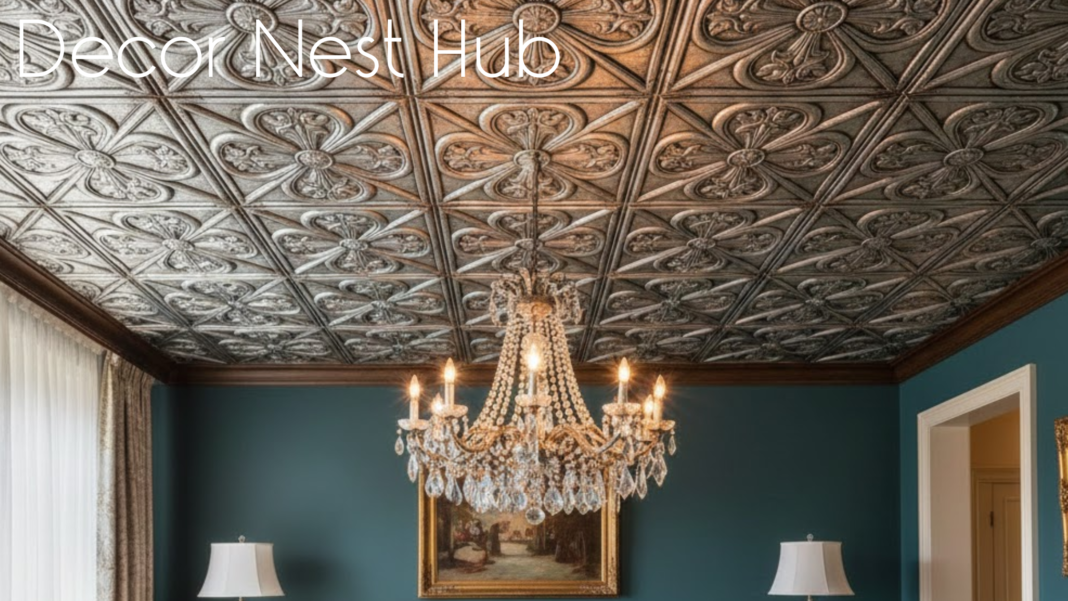
Have you ever looked up at your ceiling and thought, “Wow… this is boring”? You’re not alone. Most ceilings are just flat, white, and forgettable. But what if you could transform that blank canvas into something stunning—without tearing your house apart or emptying your wallet?
That’s where faux tin ceiling tiles come in. They bring old-world elegance, dramatic texture, and architectural personality to any space—without the heavy cost of real metal.
Let’s break it down step by step.
What Are Faux Tin Ceiling Tiles?
Definition and Materials Used
Faux tin ceiling tiles are decorative ceiling panels designed to mimic traditional pressed tin tiles. But here’s the twist—they’re not actually made of tin. Most are crafted from lightweight materials like PVC, polystyrene (styrofoam), or composite plastics.
They’re molded with intricate patterns that look just like authentic metal ceilings from the 1800s. Once installed, it’s nearly impossible for most people to tell the difference.
Difference Between Real Tin and Faux Tin Tiles
Real tin tiles are made from stamped metal sheets. They’re heavier, more expensive, and often require professional installation.
Faux versions?
- Lightweight
- Budget-friendly
- Easier to install
- Resistant to rust
Think of faux tin like the “designer handbag dupe” of the ceiling world. Same look. Less drama.
The History Behind Tin Ceiling Tiles
Origins in 19th-Century Architecture
Tin ceilings became popular in the late 1800s. They were a stylish and affordable alternative to ornate plasterwork used in European buildings.
Factories stamped metal sheets with decorative patterns, making luxury design accessible to everyday homeowners.
Why Homeowners Loved Them
They were:
- Fire-resistant
- Durable
- Elegant
- Easier to install than plaster
Today, faux tin tiles carry that same aesthetic—but with modern convenience.
Why Choose Faux Tin Over Real Tin?
Cost Comparison
Real tin tiles can cost significantly more per square foot. Add labor costs, and the price climbs quickly.
Faux tin? Often a fraction of the price. You get the same sophisticated look without financial stress.
Weight and Installation Differences
Real metal is heavy. Faux tiles are light enough to hold in one hand.
That means:
- No structural reinforcement
- Less complicated installation
- DIY-friendly projects
Durability and Maintenance
Real tin can rust over time, especially in humid spaces. Faux tiles—especially PVC—are moisture-resistant and won’t corrode.
Less maintenance. Less worry.
Popular Materials Used in Faux Tin Ceiling Tiles
PVC
The most common option. Durable, waterproof, and flexible. Great for kitchens and bathrooms.
Styrofoam
Extremely lightweight and budget-friendly. Easy to cut and glue. Perfect for quick upgrades.
Aluminum-Look Composites
These give a more authentic metallic shine while remaining lightweight.
Benefits of Installing Faux Tin Ceiling Tiles
Easy Installation
Many tiles use glue-up systems. Apply adhesive, press into place, and done. Some fit into drop ceiling grids.
It’s like putting together a puzzle—but overhead.
Lightweight Design
No heavy lifting. No complex framing. No stress.
Moisture Resistance
Ideal for basements and humid climates.
Budget-Friendly Makeover
Want a dramatic transformation without remodeling? This is it. Faux tin tiles are the lipstick of home design—small change, big impact.
Design Styles and Patterns
Victorian Patterns
Floral motifs, scrollwork, and intricate detailing. Perfect for vintage lovers.
Art Deco Styles
Bold lines. Symmetry. Geometric drama.
Modern Geometric Designs
Clean patterns for contemporary homes.
Custom Finishes
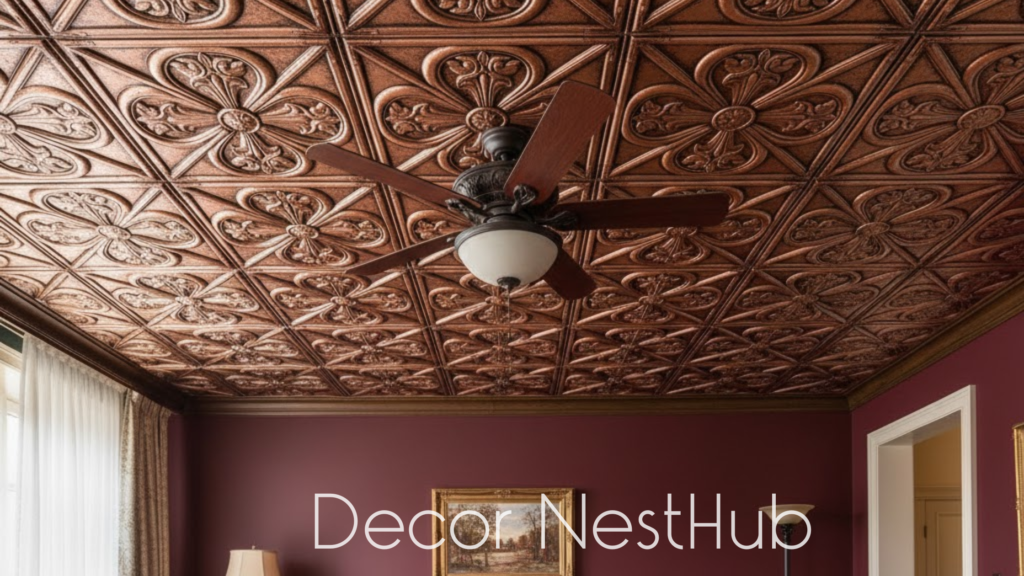
Paint them matte black. Antique bronze. Brushed nickel. Your ceiling becomes your canvas.
Where Can You Install Faux Tin Ceiling Tiles?
Kitchens
They work beautifully as ceiling features or even backsplash accents.
Living Rooms
Create a statement ceiling that draws the eye upward.
Basements
Cover up unfinished ceilings stylishly.
Commercial Spaces
Restaurants, boutiques, offices—anywhere you want character.
How to Install Faux Tin Ceiling Tiles
Surface Preparation
Clean and smooth the ceiling. Remove dust and grease.
Glue-Up Installation Method
Apply adhesive to the back. Press firmly into place. Use a level for alignment.
Drop Ceiling Grid Installation
Some tiles are designed to fit into existing suspended grid systems.
Tools Required
- Adhesive
- Utility knife
- Measuring tape
- Level
- Caulk (optional for seams)
Simple tools. Big transformation.
Maintenance and Cleaning Tips
Regular Dusting
Use a microfiber cloth or duster monthly.
Cleaning Stains Safely
Mild soap and water work for most materials. Avoid harsh chemicals.
That’s it. No polishing. No sealing.
Faux Tin Ceiling Tiles for DIY Enthusiasts
Beginner-Friendly Projects
If you can measure and apply glue, you can install these.
Common Mistakes to Avoid
- Skipping ceiling prep
- Misaligning patterns
- Using the wrong adhesive
Measure twice. Install once.
Cost Breakdown and Budget Planning
Average Price Per Square Foot
Prices vary, but faux options are typically significantly more affordable than real tin.
Installation Costs
DIY saves money. Hiring a contractor increases costs but ensures precision.
Long-Term Savings
Durability and low maintenance mean fewer repair costs over time.
Faux Tin Ceiling Tiles vs Other Ceiling Options
Drywall Ceilings
Plain and simple—but often boring.
Wood Planks
Warm but expensive and heavier.
Real Metal Tiles
Authentic but costly and labor-intensive.
Faux tin strikes the balance between beauty and practicality.
How to Choose the Right Faux Tin Ceiling Tile
Color Selection
Lighter shades make rooms feel bigger. Darker tones add drama.
Room Size Considerations
Large patterns suit bigger rooms. Smaller rooms benefit from subtle designs.
Lighting Impact
Glossy finishes reflect light. Matte finishes soften the look.
Think of lighting as the spotlight on your ceiling’s performance.
Environmental Impact and Sustainability
Recyclable Materials
Many PVC tiles are recyclable.
Energy Efficiency Benefits
Reflective finishes can enhance lighting efficiency by bouncing light around the room.
Final Thoughts on Faux Tin Ceiling Tiles
If your ceiling feels like an afterthought, faux tin tiles can turn it into a showpiece.
They’re affordable. Stylish. Practical. And surprisingly easy to install.
Why settle for flat and forgettable when you can have bold and beautiful?
Sometimes, the biggest design statement is the one above your head.
FAQs
1. Are faux tin ceiling tiles durable?
Yes. High-quality PVC and composite tiles are resistant to moisture, cracking, and warping.
2. Can I install faux tin ceiling tiles by myself?
Absolutely. Most glue-up systems are designed for DIY installation.
3. Do faux tin tiles look realistic?
Modern designs closely mimic real metal, especially metallic-finish options.
4. Are they safe for bathrooms and kitchens?
Yes, especially moisture-resistant PVC varieties.
5. Can I paint faux tin ceiling tiles?
Yes. Many tiles can be painted to match your décor.
Explore more on DecorNestHub