


Introduction to Futuristic Interior Design
Futuristic interiors are no longer a concept limited to sci-fi movies or luxury penthouses. They are stepping into everyday homes, offices, and even cafés. Imagine walking into a space that feels like it understands you—lighting adjusts automatically, furniture adapts to your needs, and every element feels intentional. Sounds exciting, right? That’s the magic of futuristic interior design.
What Does “Futuristic” Really Mean?
Futuristic doesn’t mean cold or robotic. It means forward-thinking. It’s about blending innovation, technology, and design to create spaces that feel efficient, stylish, and surprisingly human. Think of it as interior design that’s always one step ahead of your lifestyle.
Why Futuristic Interiors Are Trending Worldwide
People want smarter, cleaner, and more flexible living spaces. With smaller apartments, remote work, and growing environmental concerns, futuristic interiors offer practical solutions without sacrificing beauty. They’re not just trendy—they’re necessary.
Core Principles of Futuristic Interiors
Minimalism with a Purpose
Less is more, but only when every element has a job. Futuristic interiors strip away clutter and keep only what matters. Each piece serves a function, like a Swiss Army knife disguised as furniture.
Function Meets Aesthetics
In futuristic design, beauty isn’t just visual—it’s functional. A wall panel might look sleek, but it could also hide storage, speakers, or smart controls.
Smart Use of Space
Small room? No problem. Futuristic interiors maximize every inch using modular layouts, hidden storage, and transformable furniture.
Technology as the Backbone of Futuristic Interiors
Smart Homes and AI Integration
Technology is the beating heart of futuristic interiors.
Voice-Controlled Systems
From lights to curtains, voice assistants like Alexa or Google Home make homes respond like loyal assistants.
Automated Lighting and Climate
Lights that follow your mood and air conditioning that learns your habits—comfort without effort.
Augmented Reality and Virtual Design Tools
Designing interiors using AR lets homeowners visualize spaces before making changes. No more guesswork, only precision.
Materials That Shape the Future
Glass, Metal, and Carbon Fiber
These materials scream “future.” They’re sleek, durable, and visually lightweight, making spaces feel open and modern.
Sustainable and Eco-Friendly Materials
Bamboo, recycled plastics, and engineered wood prove that futuristic doesn’t mean harmful to the planet.
High-Gloss and Matte Finishes
Glossy surfaces reflect light for a sci-fi feel, while matte finishes balance it with sophistication.
Futuristic Color Palettes
Neutral Tones with Bold Accents
Whites, greys, and blacks dominate, while neon blues or metallic silvers add drama.
Monochrome Themes
One color, many shades—simple yet powerful.
LED-Based Dynamic Colors
Why stick to one color when your walls and ceilings can change hues with a tap?
Lighting in Futuristic Interiors
Ambient and Hidden Lighting
LED strips tucked under furniture or behind walls create a floating effect—like magic without the wand.
Smart LED Systems
Control brightness, warmth, and color from your phone. Mood lighting has never been smarter.
Natural Light Optimization
Large windows, mirrors, and open layouts bring sunlight deep into the space.
Futuristic Furniture Design
Modular and Multi-Functional Furniture
A sofa that becomes a bed, a table that hides storage—furniture that multitasks like a pro.
Curved and Fluid Shapes
Say goodbye to sharp edges. Futuristic furniture flows like water, adding softness to modern spaces.
Floating Furniture Concepts
Wall-mounted beds, shelves, and desks create a gravity-defying illusion.
Futuristic Interior Design by Space
Futuristic Living Rooms
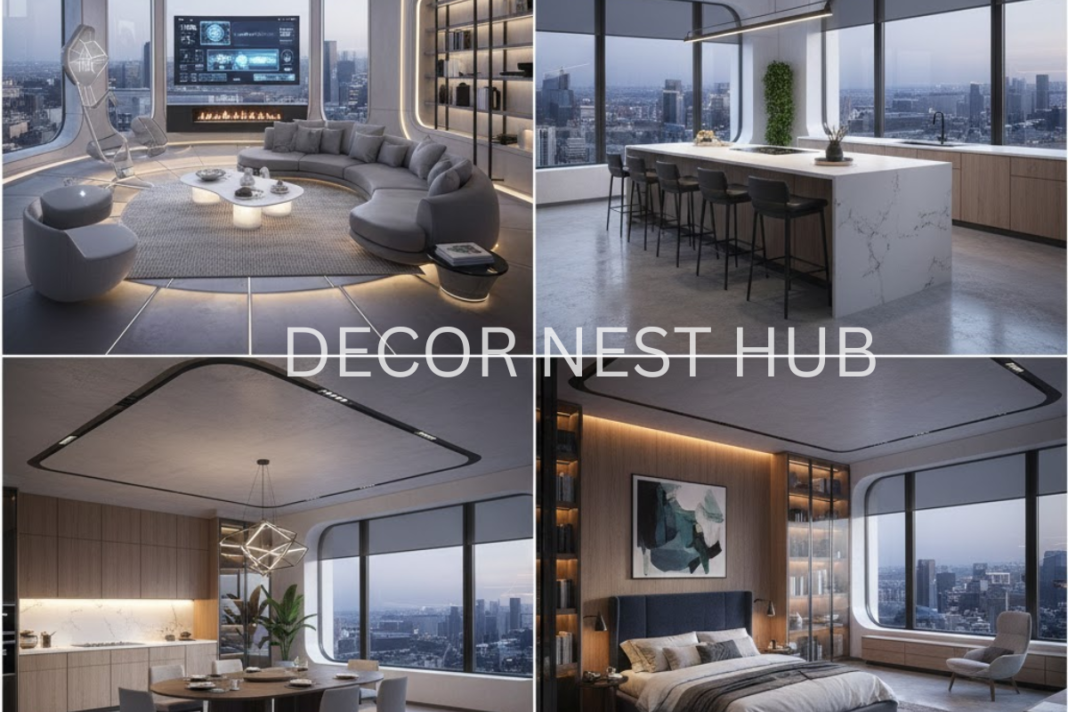
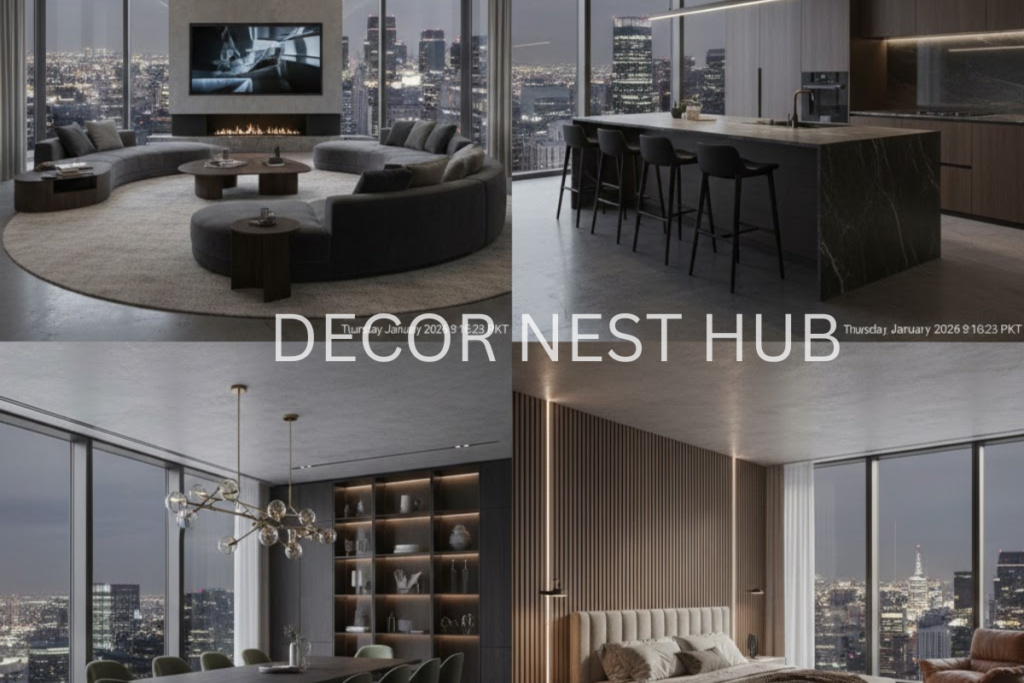
Minimal sofas, smart TVs, hidden speakers, and ambient lighting turn living rooms into experience zones.
Futuristic Bedrooms
Think calm, tech-enabled sanctuaries with automated curtains, under-bed lighting, and smart mattresses.
Futuristic Kitchens
Touchless faucets, smart appliances, and handle-less cabinets define futuristic kitchens.
Futuristic Bathrooms
LED mirrors, digital showers, and sensor-based fixtures make bathrooms feel like luxury spas.
Role of Sustainability in Futuristic Interiors
Energy Efficiency
Smart systems reduce energy waste by adjusting automatically.
Recycled and Smart Materials
Materials that last longer and reduce environmental impact are key.
Green Technology Integration
Solar panels, energy storage systems, and smart meters are becoming standard.
Cultural Influence on Futuristic Interior Design
Sci-Fi and Pop Culture Inspiration
Movies and games shape how we imagine the future—clean lines, glowing lights, and bold ideas.
Minimalist Asian Influences
Japanese and Korean design philosophies influence simplicity and balance.
European Modernism
Functionality, craftsmanship, and timeless design blend perfectly with futuristic concepts.
Common Mistakes to Avoid
Overusing Technology
Too much tech can overwhelm. Balance is everything.
Ignoring Comfort
A home should feel good, not just look cool.
Lack of Personal Touch
Your space should still reflect you, not a showroom.
How to Create a Futuristic Interior on a Budget
Smart Lighting Hacks
LED strips are affordable and instantly futuristic.
Minimal Furniture Choices
Buy fewer but smarter pieces.
Tech Upgrades That Matter
Start with smart plugs, lights, and speakers before going all-in.
The Future of Futuristic Interiors
AI-Designed Spaces
AI will soon design layouts based on habits and preferences.
Self-Adapting Homes
Homes that adjust lighting, temperature, and layout automatically.
Fully Sustainable Living
The future is green, smart, and beautifully designed.
Conclusion
Futuristic interiors are not about chasing trends—they’re about embracing smarter living. They blend technology, sustainability, and thoughtful design to create spaces that work with you, not against you. Whether you go all-in or start small, futuristic design invites you to live ahead of your time—today.
FAQs
1. Are futuristic interiors suitable for small homes?
Yes, they’re perfect for small spaces due to smart layouts and multi-functional furniture.
2. Is futuristic interior design expensive?
Not necessarily. Many elements like LED lighting and minimal furniture are budget-friendly.
3. Can futuristic interiors still feel warm and cozy?
Absolutely. Proper lighting, textures, and colors add warmth.
4. Do futuristic interiors require constant maintenance?
No, smart systems often reduce maintenance by automating tasks.
5. How do I start transitioning to a futuristic interior?
Begin with smart lighting, decluttering, and modern furniture upgrades.
Explore more on DecorNestHub