



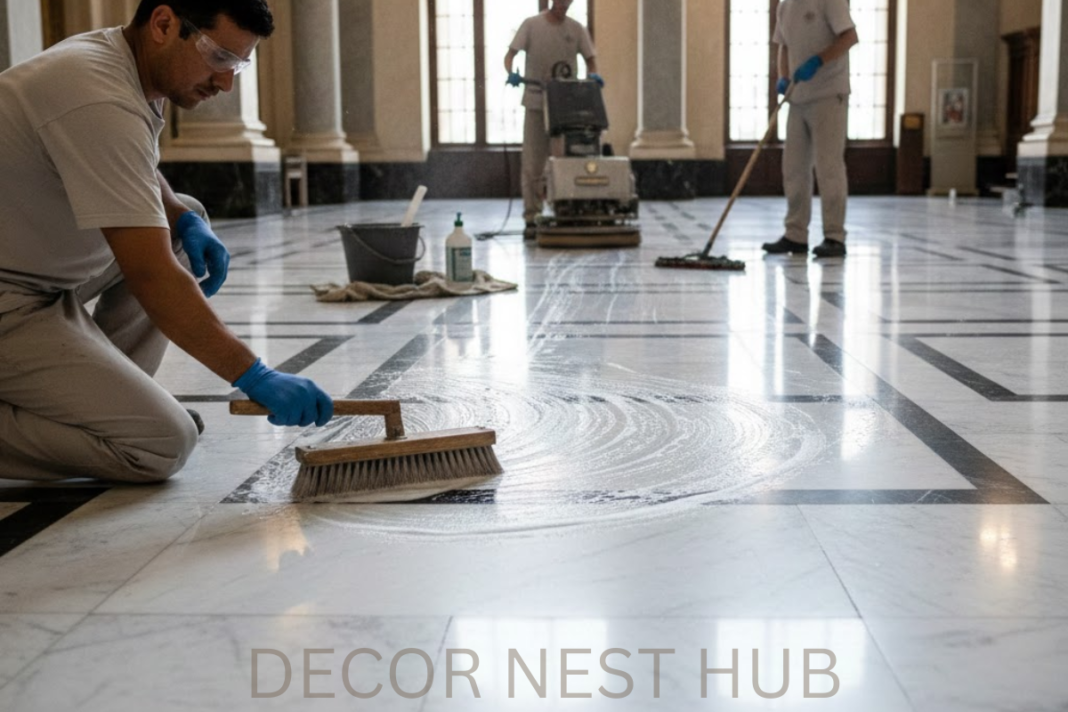
Cleaning marble floors are like the royalty of home interiors—elegant, timeless, and undeniably luxurious. But let’s be honest, they’re also a little high-maintenance. If you’ve ever panicked after spilling coffee or lemon juice on marble, you’re not alone. Cleaning marble floors isn’t hard, but it does require the right knowledge, tools, and habits.
Think of marble as sensitive skin. Treat it gently, and it glows. Treat it harshly, and it shows scars. In this guide, we’ll walk through everything you need to know to clean marble floors properly—without dulling their shine or damaging their surface.
Understanding Marble Floors
What Makes Marble Unique
Marble is a natural stone formed from limestone under intense heat and pressure. That’s what gives it those beautiful veins and patterns. No two marble floors are exactly alike, which is part of the charm.
But here’s the catch: marble is porous. That means it can absorb liquids, stains, and even cleaning chemicals if you’re not careful.
Why Marble Needs Special Care
Because marble is calcium-based, it reacts badly to acidic substances. Vinegar, lemon, bleach—these can etch the surface and leave dull marks. Cleaning marble floors is less about force and more about finesse.
Common Mistakes People Make When Cleaning Marble
Using Acidic Cleaners
This is the biggest marble sin. Vinegar might be your go-to for tiles, but on marble, it’s a disaster waiting to happen. Acid eats away at the stone, leaving etch marks that look like cloudy stains.
Overusing Water
Marble and standing water don’t mix well. Too much water can seep into the stone and cause discoloration over time. Damp is good. Soaking is not.
Scrubbing with Abrasive Tools
Steel wool, rough brushes, or scouring pads can scratch marble easily. Once scratched, that smooth, glossy finish is hard to restore without professional help.
Essential Tools and Supplies for Cleaning Marble Floors
Safe Cleaning Products
pH-Neutral Cleaners
Always choose a pH-neutral cleaner specifically designed for marble or natural stone. These clean effectively without harming the surface.
Tools You Should Always Use
Microfiber Mops and Soft Cloths
Microfiber is your marble floor’s best friend. It lifts dirt without scratching and holds just the right amount of moisture.
Daily Cleaning Routine for Marble Floors
Dry Dusting and Sweeping
Dust and grit act like sandpaper on marble. A quick daily sweep with a soft broom or microfiber dust mop prevents scratches and keeps floors looking fresh.
Quick Spill Response
Spilled something? Don’t wait. Blot—don’t wipe—the spill immediately with a soft cloth. This prevents stains from sinking in.
Weekly Marble Floor Cleaning Process
Step-by-Step Gentle Mopping
- Fill a bucket with warm water
- Add a small amount of pH-neutral marble cleaner
- Dip the mop and wring it well
- Mop gently, section by section
Proper Water-to-Cleaner Ratio
More cleaner doesn’t mean more clean. Too much product can leave residue, making floors look dull instead of shiny.
Deep Cleaning Marble Floors Safely
When Deep Cleaning Is Necessary
If your marble floors look cloudy, grimy, or uneven in shine, it’s time for a deep clean. This is usually needed every few months.
DIY vs Professional Marble Cleaning
DIY deep cleaning works for light buildup. But for heavy stains, etching, or loss of shine, professionals use specialized machines and polishing compounds that restore marble safely.
How to Remove Stains from Marble Floors
Organic Stains
Coffee, tea, food, or wine can leave yellow or brown stains. A marble-safe poultice works best to draw these stains out.
Oil-Based Stains
Grease, lotions, and oils darken marble. Use a stone-safe degreaser and avoid scrubbing.
Water Spots and Etching
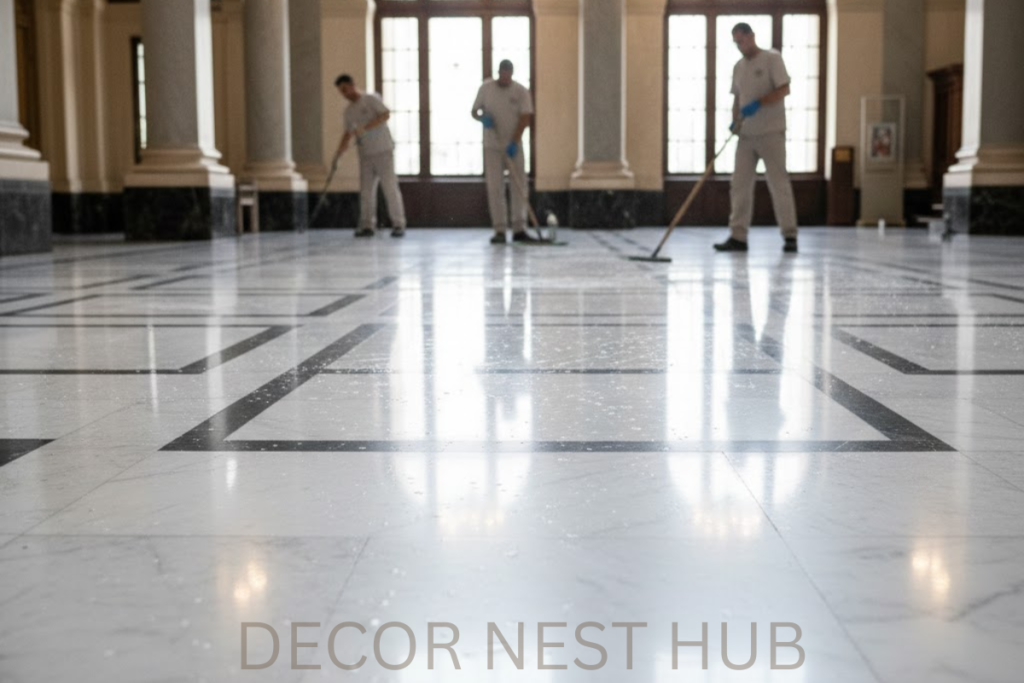
Water spots look white or cloudy. Etching requires polishing rather than cleaning. Light etching can sometimes be fixed with marble polishing powder.
Polishing Marble Floors for Lasting Shine
Natural Polishing Methods
Buffing with a dry microfiber cloth after cleaning can enhance shine naturally. It’s simple but surprisingly effective.
Commercial Marble Polishes
Use sparingly and only products designed for marble. Over-polishing can lead to buildup and slipperiness.
Sealing Marble Floors
Why Sealing Is Important
Sealers act like an invisible shield, reducing marble’s ability to absorb stains and moisture.
How Often Should Marble Be Sealed
Most marble floors need sealing every 6 to 12 months, depending on foot traffic and usage.
Marble Floor Maintenance Tips for Long-Term Care
Using Rugs and Mats
Place mats at entrances and rugs in high-traffic areas. They trap dirt before it reaches your marble.
Furniture Protection
Always use felt pads under furniture legs. One small scrape can leave a permanent mark.
Cleaning Marble Floors in High-Traffic Areas
Kitchens
Wipe spills immediately and mop more frequently. Kitchens are high-risk zones for stains.
Hallways and Living Rooms
Regular dusting is key. Grit from shoes is the biggest enemy here.
Eco-Friendly Marble Cleaning Solutions
What Works and What Doesn’t
Plain warm water and microfiber go a long way. Avoid DIY hacks with vinegar or baking soda—they’re eco-friendly but marble-unfriendly.
Seasonal Care for Marble Floors
Summer vs Winter Maintenance
In summer, humidity increases moisture absorption. In winter, grit from shoes increases scratches. Adjust cleaning frequency accordingly.
When to Call a Professional Marble Cleaner
If your marble has deep stains, scratches, or widespread etching, professionals can grind, polish, and reseal it—bringing it back to life.
Cost of Marble Floor Cleaning and Maintenance
Basic cleaning is affordable. Professional polishing and restoration cost more but extend the life of your marble, making it a smart investment.
Final Thoughts on Cleaning Marble Floors
Cleaning marble floors isn’t about working harder—it’s about working smarter. With gentle products, consistent care, and quick action on spills, your marble floors can stay stunning for decades. Treat them like fine jewelry, not like regular tiles, and they’ll reward you with timeless beauty.
FAQs
1. Can I use vinegar to clean marble floors?
No. Vinegar is acidic and can permanently etch marble.
2. How often should marble floors be mopped?
Once a week is ideal, with daily dusting.
3. Is steam cleaning safe for marble floors?
No. Steam can penetrate marble and cause damage over time.
4. Why does my marble floor look dull after cleaning?
Residue buildup or etching may be the cause. Use proper cleaner and buff dry.
5. Do marble floors need professional cleaning?
Occasionally, yes—especially for polishing and deep restoration.
Please don’t forget to leave a review.
Explore more by joining me on DecorNestHub